
Digital Connectivity Landscapes in the Southeastern United States
A Comparative Trend Analysis of Broadband Infrastructure and Educational Impact, Access, and Opportunity
Published by the Equity Assistance Center - South (EAC-South) at the Southern Education Foundation in partnership with InnovateEDU.
The digital divide in the American Southeast is no longer defined solely by the binary presence or absence of an internet connection. Instead, it has evolved into a complex ecosystem of infrastructure quality, affordability, and digital literacy.
This research explores the critical shift from measuring simple physical availability to understanding actual student connectivity, adoption barriers, and educational impacts. This shift is possible by synthesizing granular Federal Communications Commission (FCC) data, state broadband maps, district technology plans, and demographic profiles.
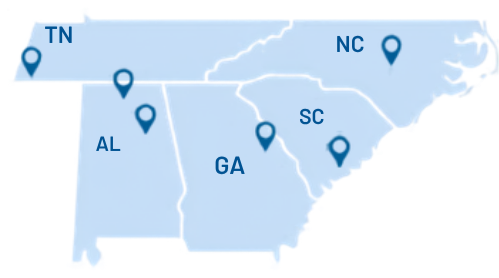
This comprehensive report delivers an exhaustive analysis of broadband access and connectivity trends across six Local Education Agencies (LEAs) in the Southeast:
Anniston City Schools (Alabama)
Madison County School System (Alabama)
McDuffie County School System (Georgia)
Halifax County Schools (North Carolina)
Dorchester School Districts Two and Four (South Carolina)
Fayette County Public Schools (Tennessee)
Key Takeaways & Trends
-
High physical availability of the internet does not guarantee universal access. In urban settings like Anniston, Alabama, cable infrastructure is widely available; however, high poverty rates create a severe adoption gap. Conversely, rural districts face persistent physical access gaps due to last-mile infrastructure challenges.
-
Relying on smartphones or cellular hotspots creates an underconnected student population. Students tethered to mobile plans frequently hit data caps, creating a "digital curfew" that disrupts homework, remote tutoring, and digital learning platforms.
-
The expiration of the federal Affordable Connectivity Program (ACP) poses a major risk to vulnerable families across the region. Without subsidies, many low-income households are forced to disconnect fixed-line internet, threatening to exacerbate the homework gap.
-
Successful expansion is happening where communities leverage cooperative models, state "Broadband Ready" designations, and public-private funding stacks. Electric cooperative fiber rollouts in Fayette County, TN and public-private capital partnerships in McDuffie County, GA are two examples of this expansion.
Recommendations for Education Leaders

Pivot to Adoption Facilitation: Shift focus from temporary hotspot distribution to long-term adoption by deploying community "Digital Navigators" who assist families in accessing affordable internet options.
Advocate for Affordability: Mobilize district and community leadership to advocate for federal and state policy solutions that replace lost ACP subsidies.
Design for Low-Bandwidth Environments: Optimize district Learning Management Systems (LMS) and digital curriculum tools to support offline capabilities and low-bandwidth connections so learning isn't interrupted at home.
Invest in Teacher PD and AI Literacy: Provide job-embedded instructional technology coaching focused on active digital learning, human-centric AI literacy, and Universal Design for Learning (UDL).